On 11 May 2026, the PA Secure Steering Group met in Tallinn, Estonia, bringing together civil protection and societal security experts from across the Baltic Sea Region. The meeting focused on the implementation of the updated PA Secure Action Plan and on emerging themes where regional cooperation can bring practical added value.
A key message from the meeting was that preparedness in the Baltic Sea Region is evolving. While traditional cooperation on risk management, exercises, public warning, shelters, evacuation and volunteer engagement remains highly relevant, PA Secure is also opening new discussions on the human, scientific and innovation dimensions of civil protection.
Psychological resilience as part of preparedness
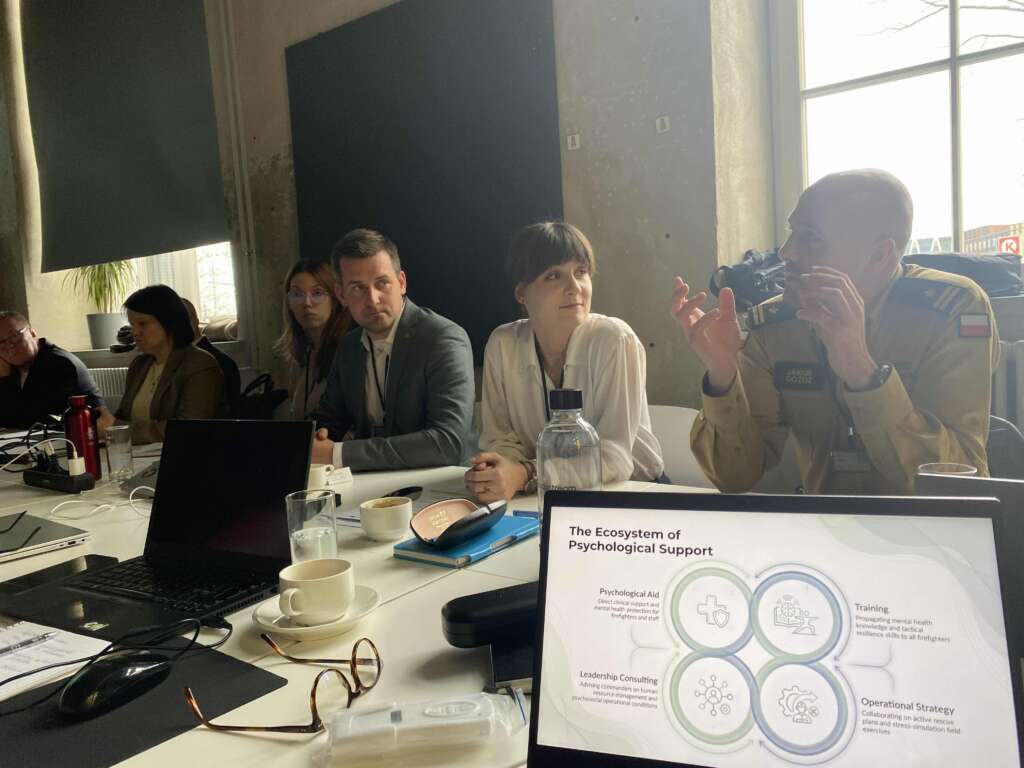
Under the Polish Presidency, the meeting placed a special focus on psychological resilience for first responders. The session looked at how stress affects performance in operational environments and how simple, repeatable techniques can support self-regulation during and after demanding incidents.
Experts introduced practical approaches to stress regulation, including breathing techniques and methods aimed at activating recovery after high-pressure situations. Polish experts also demonstrated neurofeedback-based tools and discussed their possible use in training and resilience-building.
For PA Secure, this discussion reflects an important shift: resilience is not only about systems, structures and equipment. It is also about the people who carry responsibility in crises. Supporting first responders’ ability to remain functional, recover and continue working under pressure is an essential part of societal security.
Linking research, policy and practice
Another important theme was the new PA Secure Action Plan Action on harnessing research, development and innovation for societal security. Finland presented an initiative to explore a Baltic Sea Region RDI network or ecosystem, aimed at improving the connection between research, civil protection authorities and practical preparedness work.
The discussion addressed a challenge familiar to many in the region: projects often produce valuable knowledge, tools and results, but these are not always fully taken up after the project ends. A stronger regional RDI ecosystem could help identify authorities’ practical needs, connect them with researchers and innovators, and ensure that project outcomes are better translated into everyday work, services and decision-making.
To move the initiative forward, the Steering Group agreed that a smaller working group under Finnish leadership will continue developing the possible structure, format and priorities for the future regional RDI network. This will help move the discussion from concept to practical cooperation and ensure that the network is shaped around the real needs of civil protection authorities in the Baltic Sea Region.
From exchange to action
The meeting also included national updates from Steering Group members, reflecting active work across the region on civil protection, public warning, sheltering, evacuation, total defence, civil-military cooperation, cultural heritage protection and whole-of-society preparedness. These exchanges confirmed that countries around the Baltic Sea face many similar challenges and can benefit from structured peer learning.
Participants also discussed how to move “one level deeper” in PA Secure cooperation: from identifying common priorities to connecting the right experts and practitioners around concrete themes. This may include more targeted exchanges on evacuation planning, local-level preparedness, cooperation with volunteers and NGOs, psychological resilience, and the practical use of research results.